
Mont Blanc “Monte Bianco” 4806m – with a mountain guide
Standing at 4806m, Mont Blanc is not merely the roof of the Alps — it is the birthplace of alpinism. Since 1786, when Balmat and Paccard first stepped onto its pristine summit, this massif has defined the soul of modern alpinism.
Climbing Mont Blanc (Monte Bianco in Italian) is to walk through a cathedral of granite and ice, where every step upward is a tribute to over two centuries of history.
If you don’t think you are quite ready, we can do a less demanding climb to prepare you for this big adventure. Alternatively, you can add an intro day to improve your mountaineering skills.

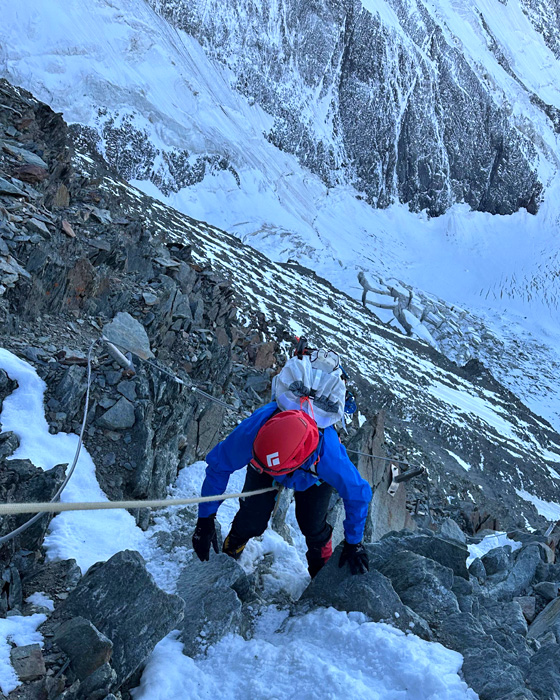


Normal French Route
The ascent of Mont Blanc through the Gouter Route (Level 3) is considered the Normal French Route from the Chamonix side. Making steps on the top of the alps is a big dream for many alpinists.
The climb requires at least basic knowledge of the use of crampons and ice axe due to the exposed, snowy and rocky sections. Before approaching it, it is highly recommended to have either a previous mountaineering experience or do some introduction routes, to learn basic crampon-walking skills.
The ascent is planned for 3-day climb to allow gradual acclimatization and to enjoy the majestic panoramas you are going encouter during the adventure.
Day 0
You arrive to Chamonix and we will meet you in the afternoon or early evening to make sure you have all that you need. Optionally, we can arrange for your pick-up from an airport or a train station.
Night: You can stay in on of the hotels or B&B of Chamonix.
Day 1
The starting point is usually Les Houches or Saint-Gervais, where climbers take a cable car and the Mont Blanc Tramway to the Nid d'Aigle (2372m).The climb begins with a hike from the Nid d'Aigle to the Refuge de Tête Rousse (3167m) for the first overnight stay. This is a straightforward path, taking approximately 2.5 to 3.5 hours, providing the first taste of altitude.
Night: Refuge de la Tête Rousse (3167m)
Day 2
Day two is the summit push, which starts around midnight to ensure safer, cold crossing of the couloir. The critical and dangerous first task is crossing the Grand Couloir, a rockfall zone, ideally in the early morning, before ascending the rocky terrain to the modern Refuge du Gouter (3835m). We will be tackling the gentle slopes of the Dôme du Gouter (4304m), pass the Vallot Emergency Shelter, and navigate the exposed, snowy Bosses Ridge to reach the Mont Blanc summit (4806m). The descent retraces the path back to the Gouter for the second night.
Night: Refuge du Gouter (4304m)
Day 3
On Day three, the final descent involves once again crossing of the Grand Couloir, with careful timing, before reaching the tramway station to return to the valley.
What’s Included
As per itinerary above.
Not Included
As per itinerary above.
FAQs and Practical Tips
We categorize all our activities — from easy hiking to challenging climbing or ski touring — and assign them a level of difficulty, so you can easily compare them.
Access the difficulty scale by clicking this icon beside the word “Level” at top of the page for each adventure/trip:

You can tailor most of our adventures; for example, making them longer or shorter, or more or less challenging.
We recommend that you get in touch with us and we choose the best options together.
Ideas for customization can be found either at the bottom of each trip description, or can be viewed by clicking this icon beside the words “Tailor this adventure” at top of the page for each adventure/trip.
To ensure you can fully immerse yourself in the beauty of the Alps, we strongly recommend that all guests carry comprehensive travel insurance. For our adventures, please ensure your policy covers outdoor sports and mountain rescue for altitudes up to 5,000m.
We are updating our specialized gear lists and we will publish them for each adventure soon.
In any case, we will email you a gear packing list after you book your trip.
We strongly advise you to let us know about any allergies, food or others, that may pose a health risk for you during your trip. This affects your own safety as well as of the whole group.
As for dietary preferences, please let us know as well ahead of time as we have to arrange for alternatives with the hut custodians.
Details on our payment, cancellation and refund policies for 2026 are being updated and will be published soon.